
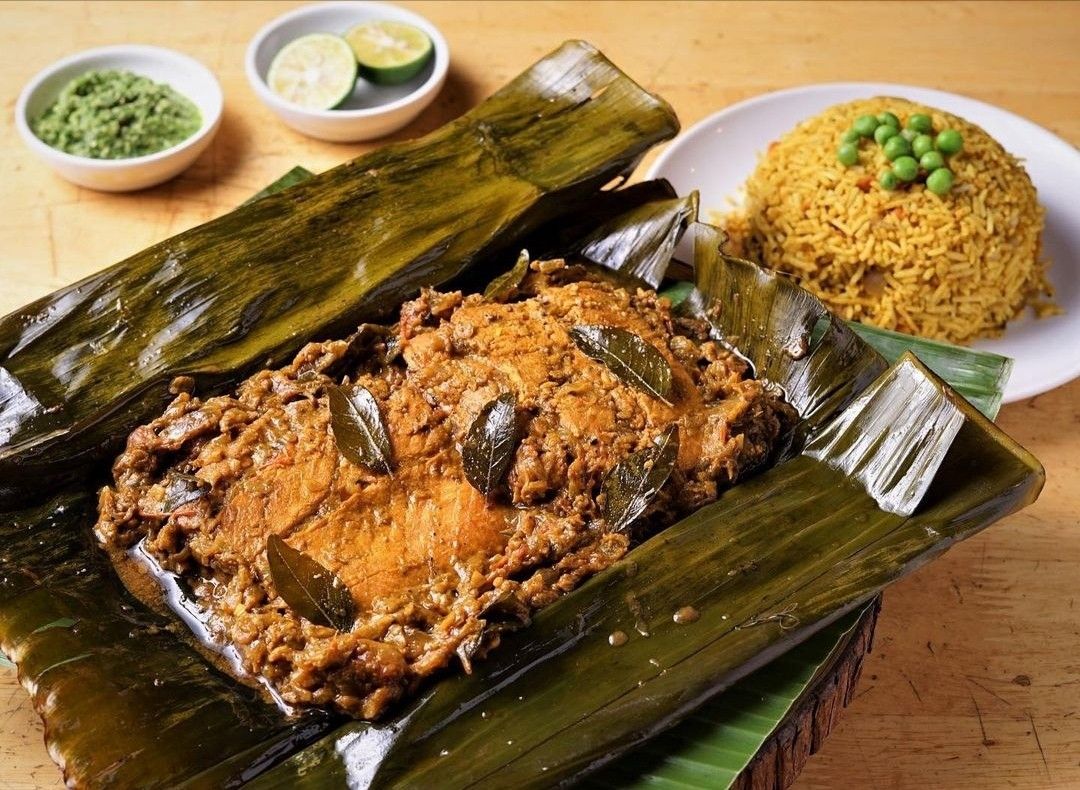
Sri Lankan lamprais is one of the most distinctive and flavorful dishes in the country’s culinary heritage. Combining fragrant rice, richly seasoned meat, traditional accompaniments and banana leaf wrapping, lamprais offers a dining experience that differs significantly from an ordinary Sri Lankan rice-and-curry meal.
The dish is closely associated with Sri Lanka’s Dutch Burgher community and reflects generations of cultural exchange, family traditions and culinary creativity.
Unlike many meals that are assembled immediately before serving, traditional lamprais is carefully prepared, wrapped in a banana leaf and baked. This process allows the different ingredients to develop a distinctive combined aroma and flavor.
Today, lamprais can be found at selected Sri Lankan restaurants, specialty food outlets, bakeries and home-based food businesses.
Whether you are a tourist exploring Sri Lankan cuisine or a local food lover interested in traditional dishes, lamprais is a meal worth discovering.
What Is Sri Lankan Lamprais?
Lamprais is a complete rice-based meal consisting of specially prepared rice, meat curry and several traditional accompaniments wrapped together in a banana leaf.
The wrapped parcel is baked before serving, allowing the ingredients to release their aromas and flavors.
Traditional lamprais is more than simply rice and curry wrapped in a banana leaf. Its identity comes from the particular combination of ingredients, preparation techniques and Dutch Burgher culinary traditions.
A traditional lamprais parcel may contain:
- Rice cooked in meat stock
- Mixed meat curry
- Frikkadels or meatballs
- Brinjal pahi
- Seeni sambol
- Blachan
- Banana leaf wrapping
The exact ingredients vary between families and recipes.
Modern restaurants also offer chicken, beef, seafood and vegetarian adaptations.
The History of Sri Lankan Lamprais
Lamprais is closely connected to the Dutch Burgher community of Sri Lanka.
The Dutch controlled significant coastal areas of Sri Lanka between the seventeenth and eighteenth centuries. During this period, European and Asian culinary traditions interacted, contributing to the development of distinctive local dishes.
The name lamprais is commonly linked to Dutch terms associated with a parcel or lump of rice.
The dish also reflects broader culinary connections between Sri Lanka and other parts of Asia that were influenced by Dutch colonial trade.
Over generations, Dutch Burgher families developed and preserved their own lamprais recipes.
Preparing lamprais traditionally required considerable time and effort because each component was cooked separately before the final meal was assembled.
Although modern versions are now available in many forms, traditional lamprais remains an important part of Sri Lanka’s multicultural food heritage.
Traditional Sri Lankan Lamprais Ingredients
The quality and character of lamprais depend on its individual components. Each ingredient contributes a different flavor, texture or aroma to the finished meal.
1. Rice Cooked in Meat Stock
The rice is one of the most important components of traditional lamprais.
Rather than using ordinary steamed rice, traditional recipes commonly prepare the rice with meat stock and aromatic seasonings.
Ingredients may include cinnamon, cardamom, cloves and other spices, depending on the family recipe.
The stock gives the rice a richer flavor and helps distinguish lamprais from an ordinary rice-and-curry meal.
Short-grain rice varieties are commonly used in traditional preparations.
2. Mixed Meat Curry
Traditional lamprais is particularly associated with mixed meat curry.
Depending on the recipe, the curry may include beef, pork, mutton or other meats.
The meat is generally cut into small pieces and cooked with spices until tender and flavorful.
Unlike some ordinary Sri Lankan curries, lamprais meat curry is usually prepared with a relatively concentrated sauce.
Modern versions frequently replace mixed meat with chicken or another single protein to accommodate different dietary preferences.
3. Frikkadels
Frikkadels are seasoned meatballs associated with Dutch-influenced cooking.
They are traditionally prepared using minced meat, breadcrumbs and seasonings.
The meatballs are shaped and cooked before being added to the lamprais parcel.
Their firm texture contrasts with the soft rice and tender meat curry.
Frikkadels are one of the components that help distinguish traditional lamprais from other banana leaf rice meals.
4. Brinjal Pahi
Brinjal pahi is a sweet, sour and spicy eggplant preparation.
The eggplant is generally cooked with ingredients such as vinegar, onions, spices and other seasonings.
Its concentrated flavor provides an important contrast to the rich meat and rice.
Although brinjal pahi and batu moju share some similarities, recipes and preparation methods can differ.
5. Seeni Sambol
Seeni sambol is a traditional Sri Lankan onion relish with a combination of sweet, spicy and savory flavors.
It is prepared by slowly cooking onions with spices and other ingredients.
Some recipes contain Maldive fish.
The sweetness of seeni sambol helps balance the stronger flavors of the meat curry and other accompaniments.
6. Blachan
Blachan is a strongly flavored condiment associated with traditional lamprais.
It commonly contains dried shrimp or shrimp-based ingredients combined with chili and other seasonings.
Its intense savory flavor means that only a small amount is generally included in the meal.
People with shellfish allergies should be particularly careful because blachan may be present even when the main protein is chicken or beef.
7. Banana Leaf Wrapping
The banana leaf is an essential part of the traditional presentation and preparation.
The rice and accompaniments are arranged on a prepared banana leaf, which is then folded into a parcel.
The parcel is baked, allowing the ingredients to heat together while developing a distinctive aroma.
The banana leaf itself is not normally eaten.
What Does Sri Lankan Lamprais Taste Like?
Lamprais combines several contrasting flavors within a single meal.
The rice is fragrant and savory, while the meat curry provides richness and spice.
Brinjal pahi introduces sweet and sour notes, seeni sambol contributes caramelized onion flavors, and blachan adds an intense savory character.
The banana leaf contributes a subtle aroma during baking.
A well-prepared lamprais parcel should offer a balance of flavors rather than allowing one ingredient to overpower everything else.
The overall experience is typically rich, aromatic and satisfying.
Traditional Lamprais vs Ordinary Rice and Curry
Although both dishes contain rice and accompaniments, lamprais differs from ordinary Sri Lankan rice and curry in several important ways.
| Feature | Traditional Lamprais | Ordinary Rice and Curry |
|---|---|---|
| Rice preparation | Often cooked in meat stock | Usually steamed or boiled |
| Main protein | Traditionally mixed meat | Fish, chicken, meat or vegetables |
| Accompaniments | Frikkadels, pahi, blachan and sambol | Various vegetable curries and sambols |
| Packaging | Banana leaf parcel | Plate, container or banana leaf |
| Final preparation | Usually baked after wrapping | Generally served after cooking |
| Culinary heritage | Dutch Burgher traditions | Diverse Sri Lankan traditions |
| Flavor | Concentrated and aromatic | Varies according to curries |
Not every banana leaf rice parcel is lamprais. The combination of ingredients and the final baking process are important characteristics of the traditional dish.
Popular Types of Lamprais in Sri Lanka
Traditional recipes have inspired several modern variations.
Chicken Lamprais
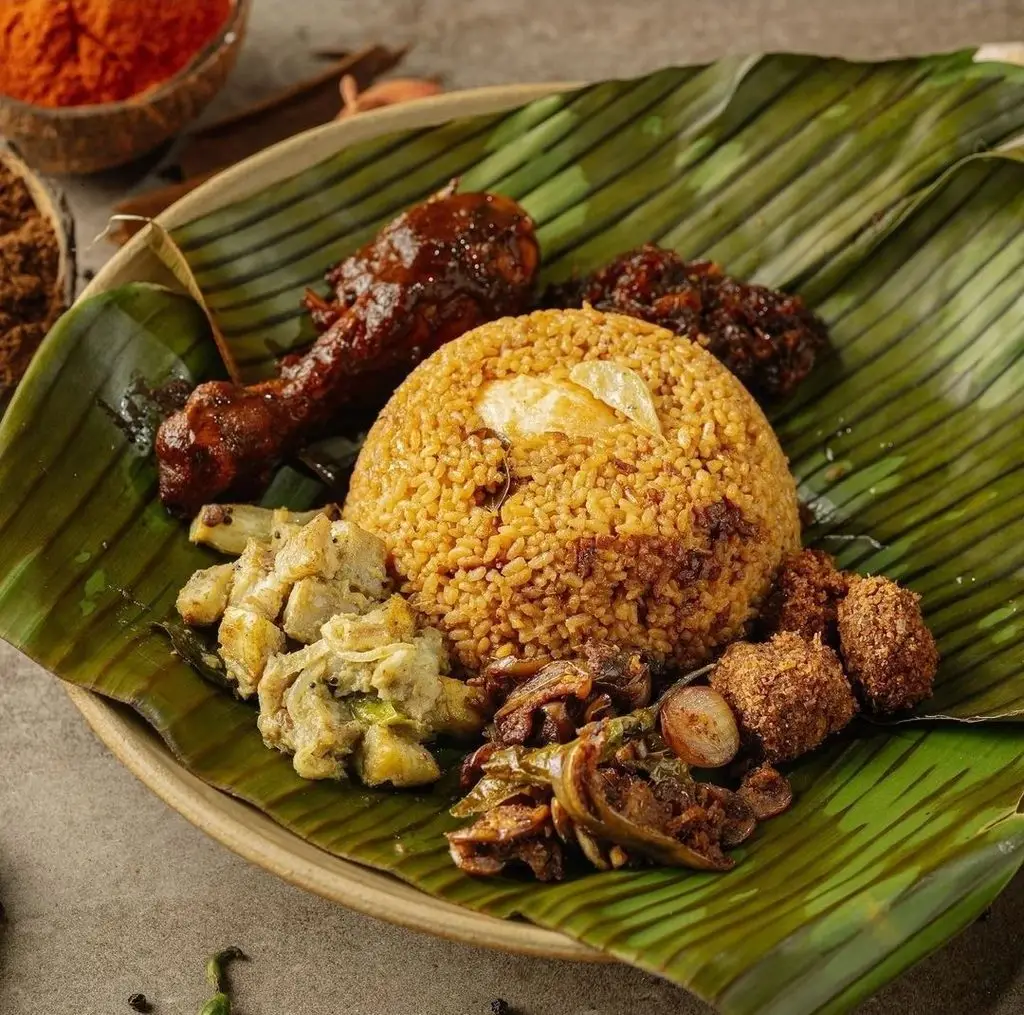
Chicken lamprais is a popular contemporary adaptation that replaces traditional mixed meat curry with chicken.
It is suitable for diners who prefer poultry, although other ingredients may still contain beef, pork, fish or shrimp.
Always confirm the complete ingredient list if you have dietary restrictions.
Beef Lamprais
Beef lamprais features beef as the main protein.
It can offer a rich flavor that complements stock-cooked rice and traditional accompaniments.
Mixed Meat Lamprais
Mixed meat lamprais is more closely associated with traditional Dutch Burgher recipes.
The combination of different meats creates a distinctive flavor profile.
The exact meat selection varies according to the recipe.
Seafood Lamprais
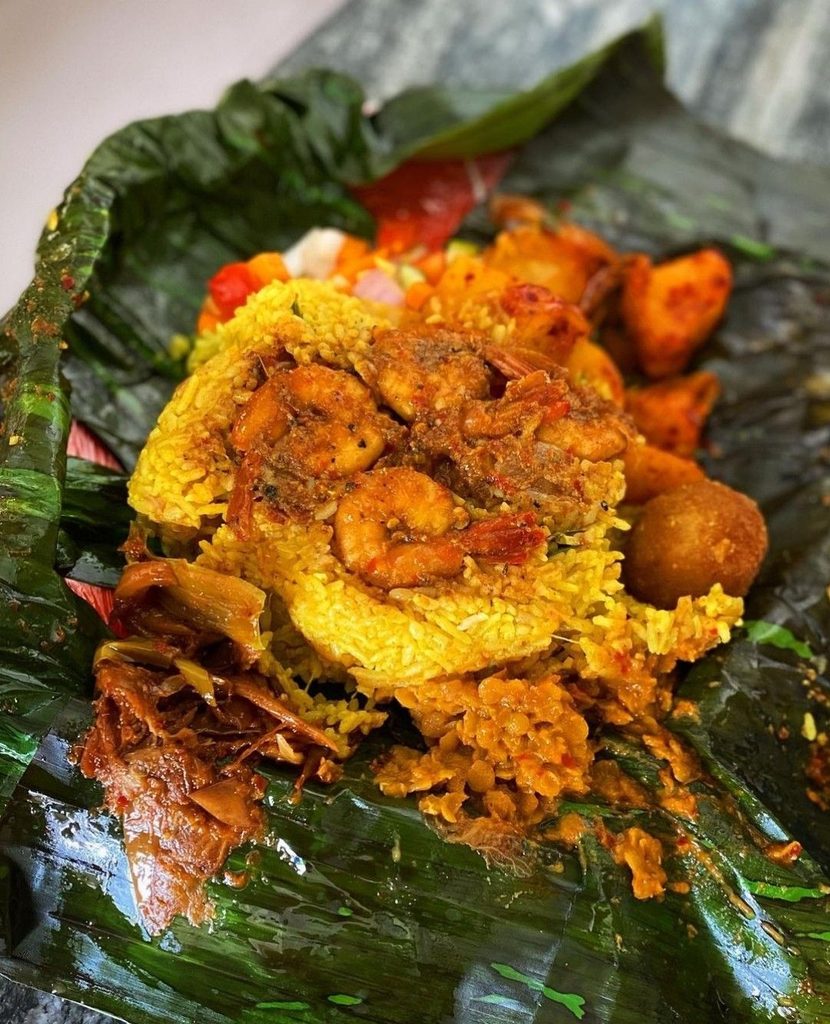
Some modern food businesses offer seafood-based lamprais using fish, prawns or other seafood.
These are contemporary interpretations rather than the classic mixed meat preparation.
Vegetarian Lamprais
Vegetarian lamprais replaces meat-based components with suitable vegetable preparations.
Possible ingredients include mushroom curry, jackfruit curry, vegetable cutlets and plant-based sambols.
A genuinely vegetarian version should also replace meat stock, traditional frikkadels and shrimp-based blachan.
Vegan Lamprais
Vegan lamprais requires additional adjustments to ensure that no meat, seafood, eggs, dairy products or other animal-derived ingredients are included.
Availability varies between food establishments.
How Traditional Lamprais Is Prepared
Lamprais is a labor-intensive dish because its components are generally prepared separately.
Step 1: Prepare the Stock
A flavorful stock is prepared for cooking the rice.
Traditional recipes may use meat, bones, spices and aromatic ingredients.
Step 2: Cook the Rice
The rice is cooked using the prepared stock and seasonings.
It should have sufficient flavor to complement the other ingredients without becoming excessively soft.
Step 3: Prepare the Meat Curry
The meat is cooked separately with spices until tender.
The curry is generally prepared with a concentrated consistency suitable for wrapping.
Step 4: Prepare the Accompaniments
Frikkadels, brinjal pahi, seeni sambol and blachan are prepared according to the recipe.
Each component contributes its own distinctive characteristics.
Step 5: Prepare the Banana Leaves
The banana leaves are cleaned and softened so they can be folded without breaking.
Step 6: Assemble the Parcel
A portion of rice is placed on the banana leaf, followed by the meat curry and accompaniments.
The leaf is carefully folded to enclose the meal.
Step 7: Bake the Lamprais
The assembled parcel is baked according to the recipe.
This final preparation helps combine the aromas of the rice, curries and banana leaf.
Where to Find Sri Lankan Lamprais
Lamprais is particularly associated with Colombo and areas where Dutch Burgher culinary traditions have been preserved.
However, modern food businesses have introduced the dish to other parts of the country.
Colombo
Colombo is a good starting point for discovering lamprais.
Specialty restaurants, traditional food businesses, selected bakeries and home-based caterers may offer different versions of the dish.
Some businesses specialize in traditional family recipes.
Negombo
Negombo’s multicultural culinary heritage makes it another interesting destination for exploring traditional Sri Lankan food.
Selected caterers and specialty food businesses may offer lamprais.
Galle
Galle has a rich colonial history and a diverse restaurant scene.
Visitors may encounter traditional and contemporary interpretations of lamprais at selected establishments.
Kandy
Lamprais may be available through specialty restaurants, bakeries and food delivery businesses in Kandy.
Online Food Delivery Services
Some Sri Lankan food businesses offer lamprais through online ordering platforms.
Traditional lamprais may only be prepared on selected days, so advance ordering can be useful.
Availability should always be confirmed directly with the food establishment.
How Much Does Lamprais Cost in Sri Lanka?
Lamprais prices depend on several factors, including the type of meat, portion size, ingredients, preparation method and restaurant location.
Traditional mixed meat lamprais can cost more than a basic rice-and-curry meal because several components must be prepared separately.
Premium versions may include higher-quality meat, larger portions or additional accompaniments.
Chicken lamprais may be more affordable than certain mixed meat or specialty versions, although this is not always the case.
Before ordering, check whether the advertised price includes packaging, delivery fees and any applicable restaurant charges.
For accurate prices, consult the restaurant’s latest menu rather than relying on older advertisements or social media posts.
How to Identify Authentic Sri Lankan Lamprais
Not every rice parcel marketed as lamprais follows traditional Dutch Burgher recipes.
If you are interested in a more traditional experience, consider the following characteristics:
- Rice prepared with flavorful stock
- Traditional mixed meat curry
- Frikkadels
- Brinjal pahi
- Blachan
- Carefully prepared accompaniments
- Banana leaf wrapping
- Baking after assembly
However, authentic family recipes are not necessarily identical.
Different households may use slightly different ingredients and preparation methods.
Modern variations can also be enjoyable without claiming to reproduce the original traditional recipe.
Is Lamprais Spicy?
Lamprais can be moderately or strongly spiced, depending on the recipe.
The meat curry, blachan and sambols may contribute significant heat.
However, the sweetness of the onion and eggplant accompaniments helps create balance.
Visitors who prefer mild food should ask about the spice level before ordering.
Because lamprais is usually assembled in advance, restaurants may not always be able to adjust individual ingredients.
Is Lamprais Halal?
Traditional lamprais is not automatically halal because some recipes contain pork or meat stock prepared using ingredients that do not meet halal requirements.
Chicken lamprais is also not necessarily halal simply because chicken is the main protein.
The rice stock, meatballs, seasonings and preparation environment must also be considered.
Customers who require halal food should confirm the ingredients and preparation practices directly with the restaurant or food supplier.
Is Lamprais Gluten-Free?
Rice itself is naturally gluten-free, but a complete lamprais parcel may contain gluten.
Frikkadels can contain breadcrumbs, and certain sauces or seasonings may contain wheat-derived ingredients.
Cross-contact during preparation is another consideration.
People with celiac disease or gluten-related dietary requirements should confirm the complete ingredient list and kitchen practices before ordering.
Food Allergies and Dietary Considerations
Traditional lamprais contains several ingredients that may be unsuitable for people with food allergies or dietary restrictions.
Potential concerns include shellfish in blachan, fish in sambols, wheat in meatballs, eggs in certain preparations and various meat products.
Because the ingredients are wrapped and baked together, simply removing one component after cooking may not prevent exposure to an allergen.
Always inform the food establishment about any serious food allergies before placing an order.
Best Drinks to Enjoy With Lamprais
The rich and aromatic flavors of lamprais can be complemented by several beverages.
Fresh Lime Juice
Fresh lime juice provides a refreshing contrast to the rich meat and spices.
King Coconut Water
King coconut water is a popular Sri Lankan beverage with a naturally mild sweetness.
Plain Ceylon Tea
Unsweetened black tea can be enjoyed after a substantial lamprais meal.
Ginger Tea
Ginger tea offers a warming and aromatic finish.
Fresh Fruit Juice
Fresh pineapple, watermelon or other fruit juices can provide a refreshing accompaniment.
Plain drinking water is also an excellent choice, particularly when the meal contains spicy accompaniments.
Best Time to Eat Lamprais
Lamprais is commonly enjoyed as a lunch meal because it is relatively substantial.
It is also suitable for dinner, family gatherings and special occasions.
Some specialty food businesses prepare lamprais only on weekends or selected days.
Ordering in advance may be necessary, particularly when purchasing traditional mixed meat lamprais from a small-scale producer.
How to Store and Reheat Lamprais Safely
Lamprais contains cooked rice, meat and other perishable ingredients.
If you are not eating it immediately, refrigerate it promptly rather than leaving the wrapped parcel at room temperature for several hours.
As a general food safety guideline, refrigerate perishable leftovers within two hours, or within one hour in temperatures above 32°C.
When reheating, ensure that the entire meal is thoroughly heated, ideally reaching an internal temperature of 74°C.
Follow any storage and reheating instructions provided by the food supplier.
Do not assume that banana leaf wrapping preserves the meal or makes it safe to store without refrigeration.
Why Tourists Should Try Lamprais in Sri Lanka
Lamprais offers international visitors an opportunity to discover a different side of Sri Lankan cuisine.
While dishes such as kottu, hoppers and rice and curry are widely recognized, lamprais represents a distinctive multicultural culinary tradition.
It combines elements of European and Asian cooking within a uniquely Sri Lankan dining experience.
The banana leaf presentation, aromatic rice, rich accompaniments and traditional preparation make it particularly interesting for travelers who enjoy exploring food history.
Trying lamprais can also help visitors understand the contribution of the Dutch Burgher community to Sri Lanka’s diverse food culture.
Frequently Asked Questions
What is Sri Lankan lamprais?
Sri Lankan lamprais is a traditional rice-based meal associated with Dutch Burgher cuisine. It typically includes stock-cooked rice, meat curry and several accompaniments wrapped in a banana leaf and baked.
Is lamprais a Dutch or Sri Lankan dish?
Lamprais is a Sri Lankan dish closely associated with the country’s Dutch Burgher community. It reflects a combination of European and Asian culinary influences.
What meat is used in traditional lamprais?
Traditional recipes commonly use a mixture of meats, which may include beef, pork and mutton. Modern versions often use chicken or a single type of meat.
Why is lamprais wrapped in a banana leaf?
Banana leaf wrapping helps enclose the ingredients during baking and contributes a distinctive aroma to the meal.
What is the difference between lamprais and rice and curry?
Lamprais uses a particular combination of stock-cooked rice, meat and traditional accompaniments that are wrapped and baked together. Ordinary rice and curry generally consists of separately prepared rice and curries.
Does lamprais contain pork?
Some traditional mixed meat lamprais recipes contain pork. Customers who avoid pork should confirm all ingredients, including the stock and meatballs.
Is chicken lamprais available in Sri Lanka?
Yes. Chicken lamprais is a common modern adaptation offered by various food businesses.
Is lamprais vegetarian?
Traditional lamprais is not vegetarian. However, some businesses offer vegetarian and vegan adaptations.
Can I eat the banana leaf?
No. The banana leaf is normally used for wrapping, cooking and presentation rather than consumption.
What is blachan in lamprais?
Blachan is a strongly flavored condiment that commonly contains dried shrimp or shrimp-based ingredients, chili and seasonings.
Why is lamprais sometimes more expensive than rice and curry?
Lamprais requires several separately prepared components, specialized ingredients, wrapping and final baking. This additional preparation can increase its cost.
Where can I find traditional lamprais in Sri Lanka?
Colombo is a particularly useful starting point. Selected specialty food businesses, restaurants and home-based caterers in other cities may also offer lamprais.
Final Thoughts
Sri Lankan lamprais is much more than a banana leaf rice parcel. It represents a distinctive culinary tradition shaped by Sri Lanka’s multicultural history and the heritage of the Dutch Burgher community.
From fragrant stock-cooked rice and richly seasoned meat to frikkadels, brinjal pahi, seeni sambol and blachan, every component contributes to the finished meal.
Although modern variations have made lamprais accessible to a wider range of diners, traditional recipes remain an important part of Sri Lanka’s food heritage.
Whether you prefer traditional mixed meat lamprais, chicken lamprais or a contemporary vegetarian interpretation, this distinctive dish offers an interesting alternative to everyday rice and curry.
For travelers and local food lovers interested in discovering Sri Lanka’s culinary diversity, lamprais deserves a place on the list of must-try traditional dishes.
Explore Menueka.com for more Sri Lankan restaurant menus, traditional food guides, regional specialties, dining recommendations and food information.